How an Emergency Dentist Can Help Save a Severely Damaged Tooth
A severely damaged tooth can go from uncomfortable to urgent in a matter of minutes. One bad fall, an unexpected bite on something hard, a sports injury, or a long-ignored cavity that suddenly gives way can leave you dealing with sharp pain, bleeding, sensitivity, or a tooth that simply does not look or feel right anymore. In that moment, people often focus on getting out of pain, which is understandable. But there is another priority that matters just as much, sometimes more: preserving the tooth before the damage becomes irreversible.
That is where an Emergency Dentist becomes so important. In many dental injuries, time changes the outcome. The difference between treatment within an hour and treatment the next day can determine whether a tooth is stabilized and restored, or whether it ends up needing root canal therapy, extraction, or replacement. Not every damaged tooth can be saved, and experienced dentists know better than to promise miracles. Still, many teeth that look alarming at first can be preserved if they are treated promptly and correctly.
The public often imagines emergency dental care as little more than pain relief. In practice, saving a severely damaged tooth usually involves fast diagnosis, careful decision-making, and a treatment plan designed to protect the tooth structure, the pulp, the surrounding bone, and the bite. The first appointment is often about controlling the immediate threat. The full repair may happen in stages, especially when swelling, trauma, or uncertain pulp health makes it smarter to reassess over time.
What “severely damaged” really means
A tooth does not need to be hanging by a thread to count as severely damaged. In a clinical setting, the term can cover several very different situations. A tooth may be cracked vertically, fractured across the biting edge, broken down almost to the gumline by decay, partially dislodged after trauma, or completely knocked out. It may also have a deep fracture that exposes the nerve, which usually causes intense pain but not always. Some badly injured teeth are surprisingly numb at first, especially after a high-impact accident.
The pattern of damage matters. A chipped front tooth that looks dramatic may actually be straightforward to restore if the root and pulp are intact. By contrast, a back tooth with a crack running below the gumline may look less severe in the mirror but be much more difficult to save. This is one reason a proper exam is so important. What patients can see rarely tells the whole story.
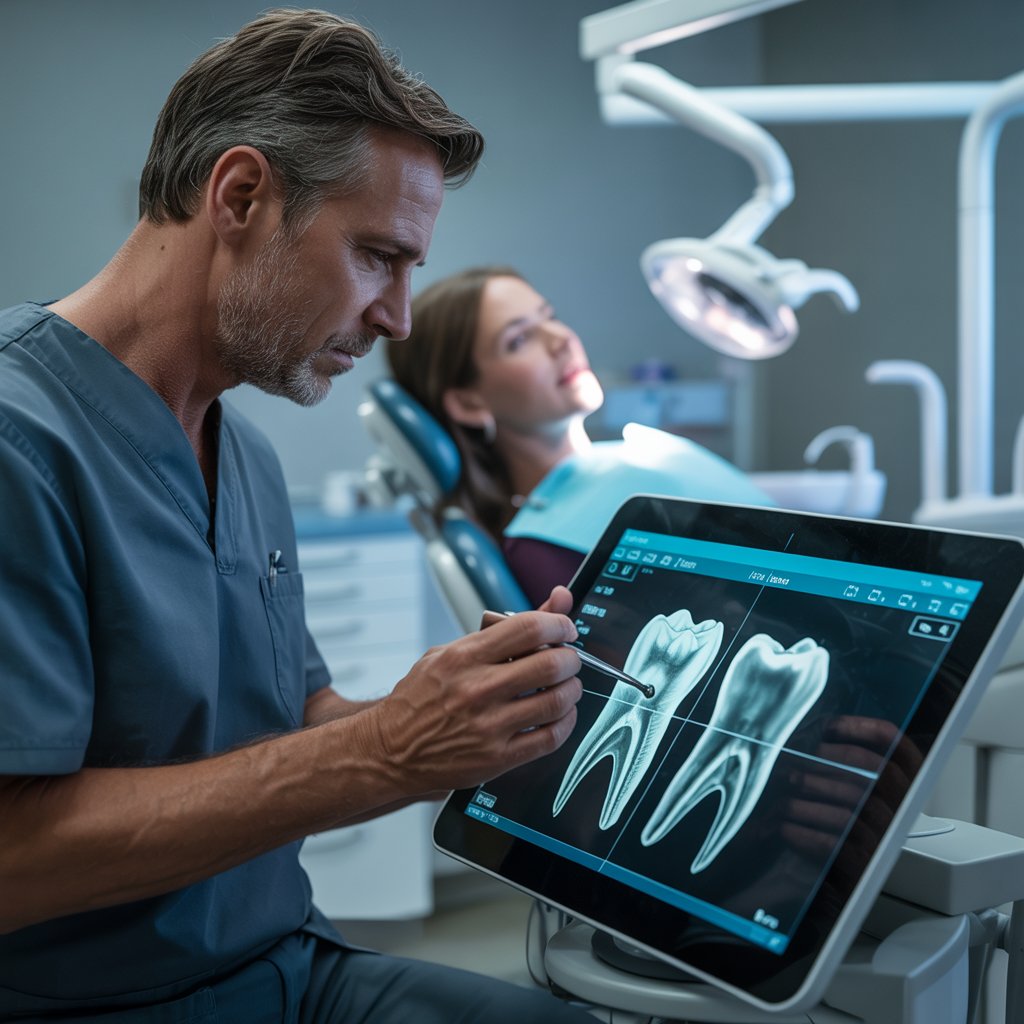
An Emergency Dentist will typically assess several things quickly: whether the tooth is mobile, whether the nerve is exposed or infected, how far the fracture extends, whether the root is involved, whether the surrounding bone or gum tissue is injured, and whether adjacent teeth were also affected. X-rays, and in some practices a cone beam scan, help reveal hidden root fractures, bone damage, or infection that changes the treatment choice.
The first hours often matter most
People are often surprised by how much can be done to improve the odds of saving a tooth in the first visit. That visit is not just a stopgap. It is often the point where the dentist interrupts a chain reaction.
A cracked tooth can continue to split under biting forces. A dislodged tooth can lose more attachment support. A tooth with an exposed pulp can quickly become contaminated by bacteria. A knocked-out permanent tooth begins to lose viable ligament cells once it dries out. Even a badly decayed tooth can deteriorate suddenly if the remaining walls fracture. The longer the delay, the fewer conservative options remain.
This is especially true with dental trauma in children, teens, and active adults. I have seen cases where a patient arrived embarrassed, apologizing for “making a fuss” over a broken tooth, only to learn that prompt stabilization likely prevented extraction. I have also seen the opposite: someone waited through a weekend hoping the pain would settle, and by Monday the crack had extended or the infection had spread enough to narrow the choices.
Prompt care does not guarantee the tooth will survive for years. Dentistry is not that predictable. What fast intervention often does is preserve options. It keeps a manageable injury from becoming a lost cause.
Situations where emergency treatment can make the difference
Some injuries clearly belong in the urgent category. Others seem minor but carry high risk. If any of the following is happening, it is wise to contact an Emergency Dentist as soon as possible:
- A tooth is knocked out, pushed out of position, or suddenly loose after trauma.
- A large piece of tooth has broken off, especially if there is bleeding from the center of the tooth or severe sensitivity.
- Pain is intense, throbbing, or worsens when biting, which can point to a deep crack or pulp involvement.
- Swelling in the gums, face, or jaw appears around the damaged tooth.
- A crown, filling, or old root canal tooth breaks in a way that leaves sharp edges, exposed tooth structure, or signs of infection.
These are not the only reasons to seek urgent help, but they are common ones. Even if the tooth does not hurt much, visible movement, a changed bite, or a fracture near the gumline deserves prompt attention.
How an Emergency Dentist evaluates whether the tooth can be saved
The first question many patients ask is simple: “Can you save it?” The honest answer is often, “Maybe, but I need to examine it.” That is not hedging. It is clinical judgment. Saving a tooth depends on factors that are only clear after an exam.
The amount of remaining healthy tooth structure is a major consideration. A tooth broken above the gumline may be restored with bonding, a crown, or a build-up. If the fracture extends deep below the gumline, treatment becomes more complex. In some cases crown lengthening or orthodontic extrusion can expose enough tooth for restoration. In other cases, the fracture is too deep or the root is compromised.
Pulp status matters too. If the nerve is exposed but the root is sound, root canal therapy may save the tooth. If the pulp is inflamed but not irreversibly damaged, there may be more conservative options, especially in younger teeth under certain circumstances. The dentist also looks at periodontal support. A tooth with healthy bone and gums has a much better chance than one already weakened by advanced periodontal disease.
Bite forces are another practical issue. A cracked molar in someone who grinds heavily at night is working under very different conditions than a similar fracture in a patient with a stable bite. The same restoration that lasts years in one mouth may fail quickly in another. Good emergency care includes thinking beyond the day of injury and anticipating the stress that tooth will face once it is repaired.
Treatments that may help preserve a damaged tooth
Emergency dental treatment is rarely one-size-fits-all. The goal is to protect the tooth with the least invasive option that is still dependable. Sometimes that means definitive treatment the same day. Sometimes it means temporary stabilization followed by reevaluation. Common approaches include the following:
- Repositioning and splinting a tooth that has been loosened or displaced by trauma.
- Bonding or rebuilding fractured areas to protect exposed dentin and restore structure.
- Performing root canal therapy when the pulp is irreversibly damaged or infected.
- Placing a temporary or permanent crown when the remaining tooth needs full coverage to prevent further fracture.
- Reimplanting a knocked-out permanent tooth if the timing and handling conditions are favorable.
Each of these treatments comes with trade-offs. Splinting can stabilize a mobile tooth, but long-term survival still depends on the root and supporting tissues healing well. Root canal therapy can remove pain and infection, but a root canal tooth often needs a crown afterward because it is structurally more vulnerable. Bonding can be conservative and quick, but on heavily loaded back teeth it may be only a short-term answer if the crack pattern is unfavorable.
Cracks, fractures, and why some teeth fail despite fast care
One of the hardest parts of emergency dentistry is that cracks do not always declare themselves fully on day one. A tooth may present with pain on biting and only a visible fracture line in the crown. The X-ray may look fairly normal. The dentist may stabilize the tooth, reduce biting pressure, and place a protective restoration. Then, days or weeks later, symptoms reveal that the crack extends deeper than originally thought.
This does not mean the initial treatment was wrong. It means cracked teeth can be unpredictable. Tiny movements along the crack line can inflame the pulp. Bacteria can track into spaces that are impossible to sterilize fully. If the crack travels into the root or splits the tooth, extraction may ultimately be the more reliable option.
Patients often find this frustrating because they want a clear yes-or-no answer right away. Realistically, experienced dentists often work in stages when the prognosis is uncertain. They stabilize first, relieve pain, protect the tooth, and monitor. This measured Emergency Dentist approach saves many teeth that would otherwise be written off too early, while also avoiding false reassurance when the biology is questionable.
What happens with a knocked-out tooth
A knocked-out permanent tooth is one of the clearest examples of why emergency care matters. In the best-case scenario, the tooth can sometimes be replanted and splinted. The outcome depends heavily on how long the tooth has been out of the mouth and whether it has been kept moist. The periodontal ligament cells on the root surface are delicate. If the tooth dries out for too long, the chances of long-term success drop sharply.
A baby tooth should generally not be replanted because of the risk to the developing permanent tooth beneath it. A permanent tooth is different, and fast action can make a real difference. In the office, the Emergency Dentist will inspect the socket, assess contamination, reposition the tooth if reimplantation is appropriate, and apply a splint. Follow-up is crucial because many of these teeth later need root canal treatment and long-term monitoring for root resorption or ankylosis.
Even when the tooth is saved, “saved” does not always mean permanently normal. It may remain slightly discolored, need endodontic care, or carry a guarded long-term prognosis. Still, preserving the natural tooth, even for a number of years, is often preferable to losing it immediately.
Severe decay can also become a true emergency
Trauma gets attention because it is sudden and visible. Severe decay is more common, and just as capable of destroying a tooth quickly. A tooth that has quietly weakened over months can fracture while chewing something as ordinary as bread with a crust, nuts, or a piece of ice. Patients are often startled because the tooth “didn’t seem that Emergency Dentist bad” before it broke. In reality, the cavity may have hollowed out much of the internal structure while leaving a shell that finally gave way.
When decay-related fractures happen, the Emergency Dentist has to judge whether enough sound tooth remains for restoration. If the margins extend too deep under the gum, isolation becomes difficult and the prognosis drops. But if the root is solid and enough structure can be preserved, a build-up and crown may still save the tooth. In some cases, root canal treatment is added because bacteria have already reached the pulp.
This is one reason emergency visits sometimes uncover larger issues than the visible break. The broken surface is only the latest event. The real problem may be longstanding decay, old leaking fillings, or grinding that weakened the tooth over time.
What you should do before you reach the office
The period between the injury and the appointment matters. Calm, practical steps can reduce damage and improve comfort:
- If a permanent tooth is knocked out, hold it by the crown, not the root, and keep it moist in milk or saliva if possible.
- If a piece of tooth breaks off, bring the fragment with you. Sometimes it can help with the repair.
- Rinse gently with warm water, and apply a cold compress on the outside of the face if there is swelling.
- Avoid chewing on the injured side, and skip very hot, very cold, or sugary foods if the tooth is sensitive.
- If bleeding continues, use gentle pressure with clean gauze and seek care promptly.
People sometimes reach for over-the-counter dental cement or attempt to glue fragments back in place with household adhesives. That usually complicates treatment rather than helping. The safest approach is to protect the area, keep the tooth or fragment clean and moist when relevant, and get professional care.
Pain control is part of the picture, but not the whole picture
When people think emergency dental care, they usually think pain relief first. Fair enough. Tooth pain can be relentless, and deep dental pain has a way of taking over concentration, sleep, and appetite. A good Emergency Dentist addresses pain quickly, but the more important clinical question is what is causing it.
Pain from pulp exposure requires different treatment than pain from a tooth displaced in its socket. A cracked cusp hurts differently than an abscess draining through the gum. Even when two patients describe their pain in nearly identical words, the treatment may not be the same. That is why strong painkillers alone are not a real solution. They can make the wait more tolerable, but they do not stabilize a fracture, reattach a ligament, or remove infected tissue.
Antibiotics are another area where expectations and reality often diverge. They are useful in specific situations, especially when there is spreading infection, swelling, or systemic involvement. They do not “fix” a broken or infected tooth on their own. Many patients feel temporary improvement and assume the problem is solved, only to have the pain return once the medication ends because the source remains.
When saving the tooth is not the best choice
A realistic discussion of emergency dentistry has to include this point: sometimes the right care is not salvage, but extraction. That decision is not a failure. It is often the most honest and appropriate recommendation when the tooth is split vertically, the root fracture is severe, decay extends too far below the gumline, or support from the surrounding bone is too compromised.
An experienced dentist weighs the likely lifespan of a heroic repair against the cost, complexity, and burden on the patient. A tooth that can technically be saved for a short period is not always the best investment if it will remain unstable, painful, or difficult to clean. On the other hand, removing a tooth too quickly can also be a mistake, especially when stabilization could preserve it with a reasonable prognosis. Good emergency care is not about doing the biggest procedure. It is about making the best call under pressure.
Patients appreciate directness here. If the odds are poor, it is better to say so. If the tooth is worth trying to save, that should be explained too, along with what success and failure would each look like over the next weeks and months.
The days after emergency treatment matter almost as much as the first visit
A severely damaged tooth rarely becomes “done” in a single appointment. Follow-up is often where the outcome is secured. The tooth may need pulp testing later, a permanent crown after a temporary build-up, splint removal after healing, or endodontic treatment if symptoms evolve. The bite may need adjustment so the tooth is not overloaded while recovering. In trauma cases, nearby teeth sometimes develop delayed symptoms and need monitoring as well.
This is also the stage where patient habits can influence success. Chewing ice, clenching, skipping follow-up, or treating a temporary crown as if it were permanent can undo careful work. So can avoiding treatment because the tooth feels better. Some of the most difficult emergencies are not first-time injuries at all, but partially treated problems that were never completed after the pain settled.
Why speed, judgment, and technique all matter
Not every urgent dental visit requires a specialist-level rescue. But when a tooth is badly compromised, the clinician’s judgment matters as much as the schedule opening that got you in. The value of an Emergency Dentist lies in more than availability. It lies in knowing how to distinguish a restorable fracture from a hopeless split, when to splint and when not to, when a pulp can be protected and when it needs definitive treatment, and how to preserve future options even when the final prognosis remains uncertain.
That blend of speed and restraint is what saves teeth. Rushing into a definitive restoration on a tooth that needs observation can be as damaging as delaying necessary treatment. So can overtreating pain without addressing structure, or undertreating a crack that will predictably worsen.
A severely damaged tooth creates urgency because dental tissues have limited ways of recovering once they are contaminated, fractured, or displaced. Fast, skilled intervention cannot reverse every injury, but it can often interrupt the process that turns a salvageable tooth into a lost one. For patients, that may mean keeping their natural tooth, avoiding more invasive replacement, preserving bone and bite function, and reducing the cost and complexity of care over time.
When a tooth is badly damaged, waiting to “see how it feels tomorrow” is rarely a smart gamble. The better move is to have it assessed while there is still something meaningful to save.
Vitality Dental
1220 Coit Rd # 106, Plano, TX 75075, United States
+1 972-645-4100
FAQ About Emergency Dentist
What counts as a dental emergency?
A knocked-out tooth, significant mouth injury, severe tooth pain, or painful swelling warrants prompt evaluation. Call your dentist and describe your symptoms so the office can advise you on how urgently you need care.
What should I do if I knock out a permanent tooth?
Call a dentist immediately. Handle the tooth by the crown, avoid touching the root, and keep it moist. If you cannot put it back into the socket easily, transport it in milk or a tooth-preservation solution. Bring it with you to the appointment.
Should I go to the emergency room for a dental emergency?
Seek emergency medical care right away if you have trouble breathing or swallowing, uncontrolled bleeding, or a serious facial injury. For an isolated tooth injury or toothache without those symptoms, call a dentist promptly for guidance.